














In Honour of Breastfeeding Awareness Month: A Divine Right and Natural Blessing
By Hajira Halilu
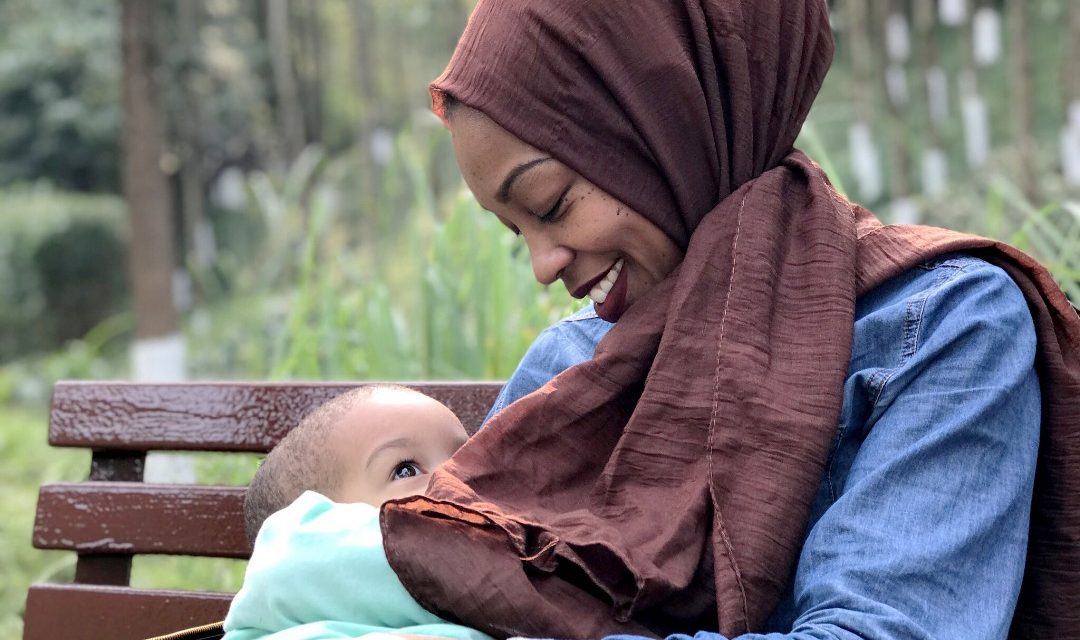
Breastfeeding is not merely a personal or biological act—it is a divine trust, a child’s right, and a mother’s honor. As we mark Breastfeeding Awareness Month, it is important for humanity and Muslims in particular to reflect on the timeless wisdom Islam has offered on this matter over fourteen centuries ago. Long before modern medicine and international organizations confirmed its benefits, Islam prescribed breastfeeding as a sacred duty (ibaada).
Breastfeeding: A Right Established by Shari’ah
From the outset, Islam has affirmed breastfeeding as a haqq—a rightful claim—of the infant. If a child is in need of milk and of nursing age, it becomes obligatory to provide breast milk. As stated in al-Mawsu’ah al-Fiqhiyyah (22/239), scholars unanimously agree that breastfeeding for an infant is akin to the maintenance and nourishment required for an adult.
Allah says in the Qur’an:
“The mothers shall give suck to their children for two whole years, for those who wish to complete the term of suckling.”
[Surah Al-Baqarah, 2:233]
This verse honors the infant’s right to breastfeeding and establishes the minimum period for nursing. Allah further extends the infant’s rights by imposing responsibility on the father:
“But the father of the child shall bear the cost of the mother’s food and clothing on a reasonable basis.”
[Surah Al-Baqarah, 2:233]
This highlights the shared parental duty—the father ensures the mother’s needs are met so she can breastfeed, and the mother bears the responsibility to nurse the child until the prescribed age.
The noble Prophet Muhammad ﷺ said,
“A woman should not refuse to breastfeed her child when she is able to do so.” (Sahih Muslim 1452)
This hadith emphasizes the mother’s duty unless she has a valid excuse. If she cannot breastfeed, Islam permits a wet nurse, ensuring the child’s right to nourishment remains fulfilled. The Prophet ﷺ himself was nursed by Halimah as-Sa’diyyah, demonstrating the importance of this alternative.
Breastfeeding and Social Bonds
Islam also recognizes the spiritual and social impact of breastfeeding. A child who is breastfed by a woman becomes her mahram—a permanent non-marriageable kin, establishing familial bonds akin to biological ties. This bond carries significant legal and emotional weight, as the child shares a unique kinship through milk.
Because of this, scholars advise choosing a righteous, healthy woman as a wet nurse, avoiding those who are immoral, disbelieving, or diseased to protect the child’s well-being.
Science Confirms Revelation
Today, modern science confirms what the Qur’an revealed over 1400 years ago. The World Health Organization (WHO) and health authorities recommend exclusive breastfeeding for six months and continued breastfeeding up to two years or beyond.
Breastfeeding provides:
- Immunity and Protection: Breast milk contains antibodies that protect infants from common illnesses.
- Digestive Ease: It is tailored to the infant’s digestive system, reducing allergies and colic.
- Nutritional Perfection: It offers ideal protein, enzymes, vitamins, and nutrients adapted to each stage of growth.
- Emotional Bonding: Skin-to-skin contact fosters deep security and love between mother and child.
- Maternal Health: Breastfeeding aids postpartum recovery, reduces certain cancer risks, and naturally spaces births.
A Spiritual Act of Mercy
Breastfeeding is more than nourishment—it is rahmah (mercy), amanah (trust), and ibadah (worship). The mother fulfills a divine command while nurturing the next generation physically and emotionally. It is a profound mercy that Allah places compassion in the mother’s heart, allowing her to endure hardship and sacrifice without complaint.
The first nourishment of our beloved Prophet Muhammad ﷺ came from his mother Aaminah and then his wet nurse Halimah, illustrating the nobility of this act.
In Conclusion
Breastfeeding is a moral, spiritual, and familial obligation, not just a health recommendation. This month, let us support mothers in our communities by raising awareness, offering assistance, and removing barriers to this beautiful Sunnah.
May Allah bless our mothers and reward those who nurture their children with patience and love. May we honor every command He has prescribed for our benefit in this world and the hereafter.