

















Maize Markets In Motion: Temporary Relief, Rising Pressure And The Road To 2026 Harvest
By Haroon Mia
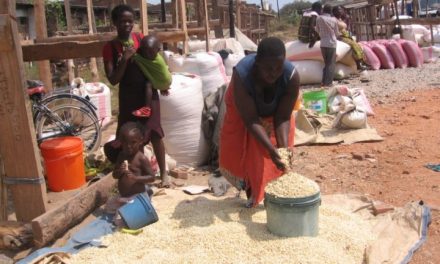
For most Malawian households, maize prices are not abstract economic indicators. They determine how many meals are cooked; how large the portions are and whether other essentials must be sacrificed. Over the past six months, the maize market has followed an unusual and revealing pattern — one that exposes both the power and the limits of government intervention.
As the 2025/26 lean season began, prices opened at a high point of MK 1,350 per kilogram in November 2025. Tight domestic supply, elevated transport costs and uncertainty over rainfall created upward pressure. For many families, the lean season had arrived earlier and harsher than expected.
Then came a rare development. Between December 2025 and January 2026, prices declined steadily, reaching MK 1,000 per kilogram in January. A mid-lean-season drop of this magnitude is uncommon. Historically, prices tend to rise during this period as household stocks diminish and market demand intensifies.
The January relief, however, was not market-driven. It was policy-driven.
Through the Agricultural Development and Marketing Corporation (ADMARC), government maize was sold at MK 600 per kilogram — a heavily subsidised rate that compelled private traders to adjust downward. Simultaneously, the National Food Reserve Agency released maize from the Strategic Grain Reserve into ADMARC depots and humanitarian pipelines, increasing market availability.
Border monitoring was also tightened to curb informal exports to neighbouring Mozambique and Tanzania, ensuring more maize remained within domestic markets. In addition, government signalled readiness to approve controlled imports, discouraging speculative hoarding. Humanitarian distributions further reduced pressure on commercial markets.
The combined effect of these measures was visible in the January low of MK 1,000 per kilogram.
Yet by February 2026, prices had rebounded sharply to MK 1,300 per kilogram, erasing much of the temporary relief. The speed of the rebound tells its own story.
As ADMARC stocks tightened, its influence over pricing weakened. Private traders regained pricing power as lean-season demand intensified. Meanwhile, underlying cost drivers — high fuel prices, transport costs and currency pressures — remained unchanged. Continued rainfall uncertainty also fuelled caution, as traders priced in the risk of a weaker 2026 harvest.
A year-on-year comparison offers sobering context. In February 2025, maize averaged MK 740 per kilogram. In February 2026, the price stood at MK 1,300 — a 76 percent increase within twelve months. Even at the January “low,” maize was significantly more expensive than the previous year.
The intervention was effective in the short term. It provided breathing space at a critical moment. However, its sustainability is questionable. ADMARC purchasing maize at MK 750 to MK 900 per kilogram while selling at MK 600 creates structural losses. Strategic Grain Reserve stocks are finite and costly to replenish. Importing maize remains expensive in the context of a weakened Kwacha. Border enforcement requires sustained resources. Most importantly, structural cost drivers — fuel, fertiliser, transport and climate variability — remain unresolved.
As Malawi approaches the 2026 harvest, the central challenge is not merely availability, but affordability. Rising maize prices compress household budgets, forcing families to cut spending on protein, vegetables and other nutrient-dense foods. Nutrition risks increase quietly, even when markets appear supplied.
The January dip demonstrated that policy can influence prices. The February rebound demonstrated that without structural reform, such gains are temporary. Sustainable stability will require strengthening ADMARC’s financial model, improving Strategic Grain Reserve management, reducing logistics costs and investing in climate-resilient production systems.
In the maize economy, short-term relief is valuable. But long-term resilience is indispensable.