














GAZA BETWEEN PAUSE AND PAIN: Life Under a Ceasefire That Never Fully Arrived
Prepared by Abdullah Bamusi Nankumba
When the first phase of a United States-brokered ceasefire in Gaza took effect on 10 October 2025, cautious optimism rippled across a weary world. The agreement was framed as a humanitarian pause, meant to reduce bloodshed, allow aid delivery, and lay the groundwork for a sustainable political process. For Palestinians in Gaza, however, the months that followed have exposed a harsher truth: the language of ceasefire has not translated into the reality of safety.
“A ceasefire that still counts the dead.”
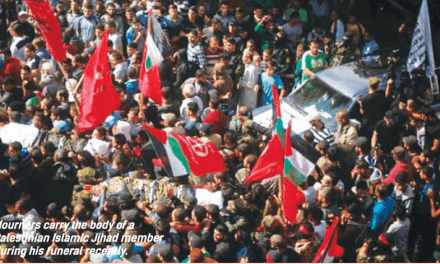
Despite the announcement, violence persisted. According to Al Jazeera, data from Gaza’s Government Media Office shows that at least 449 Palestinians were killed and more than 1,200 injured after the ceasefire began, with hundreds of bodies later recovered from beneath rubble. These deaths resulted from airstrikes, gunfire, incursions, and demolitions that continued despite the truce. Officials recorded more than 800 violations in the initial months alone, challenging the credibility of the agreement.
Local health authorities cited by Al Jazeera report that women and children were among those killed during the ceasefire period. In particularly distressing cases, infants and displaced children died from hypothermia due to inadequate shelter during winter. More than 100 children are reported to have died since October, many not from direct attacks but from exposure, hunger, and untreated illness.
“Violence paused on paper, not on the ground.”
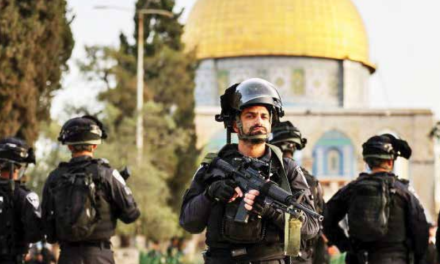
For Gaza’s population, the ceasefire has meant sporadic bombardment, deadly enforcement of movement restrictions, and constant fear. Residents describe a life shaped by uncertainty, where survival depends not on peace but on chance. The absence of sustained protection has turned the truce into what many see as a technical pause rather than a humanitarian safeguard.
Blockade Without Relief
Beyond the deaths lies another layer of suffering: deprivation. According to Al Jazeera, the ceasefire’s humanitarian provisions promised the entry of up to 600 aid trucks per day. In practice, deliveries have frequently fallen far short. Food, fuel, medicine, and winter supplies remain scarce, deepening an already catastrophic humanitarian situation.
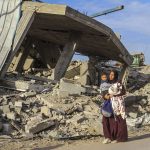
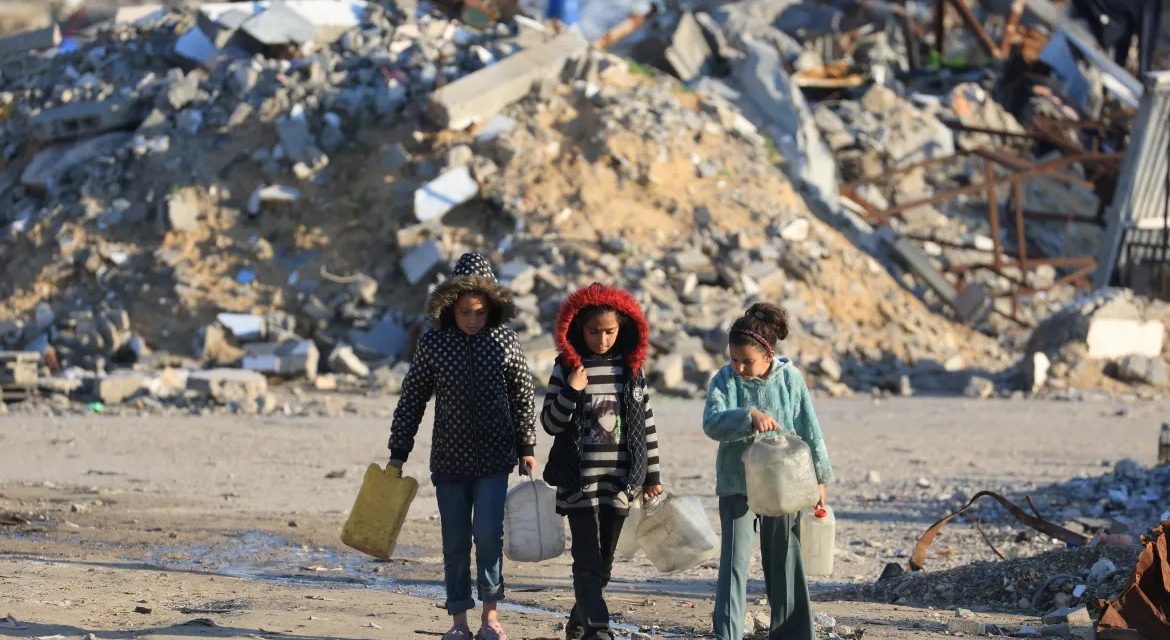
Displaced families continue to live in tents and overcrowded camps, often on the ruins of their former homes. Poor sanitation, lack of clean water, and limited medical care have increased the risk of disease. Aid agencies warn, according to Al Jazeera, that deaths from malnutrition, exposure, and preventable illness could soon rival those caused directly by violence.
Movement inside Gaza is also tightly restricted. Civilians struggle to reach hospitals, food distribution points, or remaining aid centres. Permits are difficult to obtain, and routes are frequently closed without warning, compounding trauma for a population that has endured repeated displacement.
Phase Two, Missing Voices
As the agreement moved into its second phase, attention shifted to its political architecture. A new oversight mechanism, led by the United States with international partners, was announced to manage implementation. Yet, according to Al Jazeera, Palestinians from Gaza were excluded from direct participation in these negotiations.
“Peace discussed without the people who pay its price.”
This absence has fuelled anger and mistrust. Critics argue that excluding Gaza’s representatives undermines the legitimacy of any political process. For many residents, it echoes a familiar pattern in which external powers shape outcomes while those most affected remain unheard.
Analysts cited by Al Jazeera warn that peace frameworks lacking local ownership rarely succeed. Without meaningful Palestinian participation, reconstruction and governance plans risk being perceived as imposed solutions rather than collective commitments.
The United States Under Scrutiny
The role of the United States has been central throughout. Washington brokered the initial ceasefire and continues to influence its second phase. However, according to Al Jazeera, critics argue that U.S. policy prioritises Israeli security concerns while failing to enforce meaningful protections for Palestinian civilians.
The continuation of military support to Israel during the ceasefire period has intensified skepticism in Gaza. Many question how a mediator can claim neutrality while enabling ongoing operations that sustain civilian suffering. This perceived imbalance has weakened confidence in American-led diplomacy.
Voices from the Rubble
According to Al Jazeera, Gazans repeatedly stress that peace cannot be abstract. One resident told the network, “Peace cannot be built in rooms where we are not present, while our homes are destroyed outside.” Humanitarian workers echo this view, warning that political processes divorced from lived reality risk entrenching, rather than ending, cycles of violence.
Conclusion: Beyond the Word ‘Ceasefire’
Gaza now stands at a critical juncture. A ceasefire that fails to protect life, guarantee aid, and include Palestinian voices risks becoming an empty term. Stability cannot be measured by diplomatic statements alone, but by whether families can live without fear, hunger, and exclusion.
For Gaza’s people, peace must mean more than silence between strikes. It must mean dignity, justice, and the right to shape their own future. Until then, the ceasefire remains a pause in language, not in suffering.