







RECOGNITION, RELIEF, AND RESISTANCE: What Recent Statehood Moves Mean for Palestine
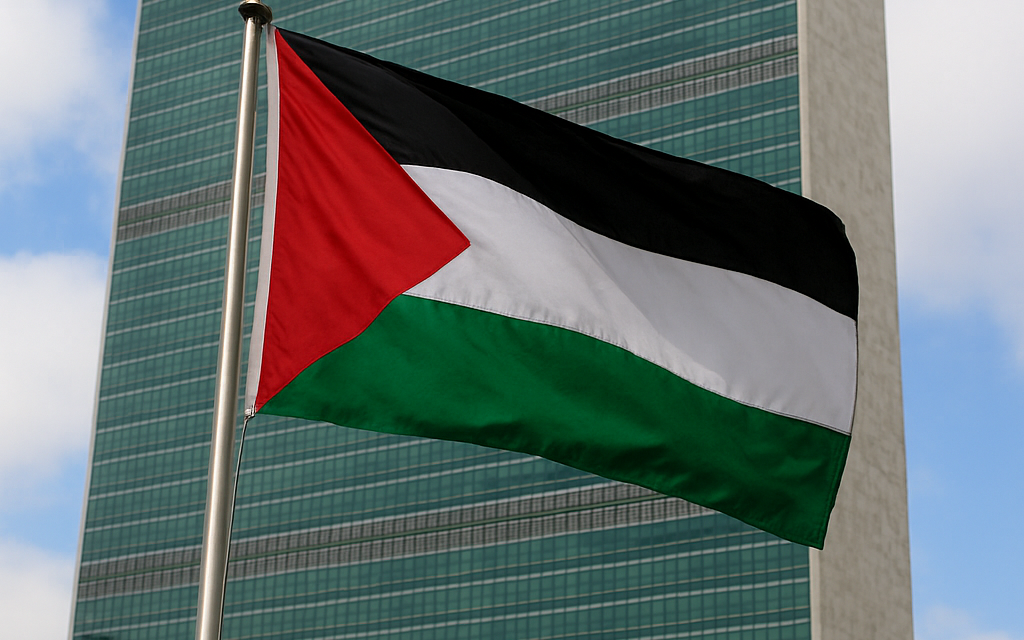
As the UN General Assembly convened in late September 2025, a wave of countries formally recognized the State of Palestine — including France, Belgium, Canada, Australia, Portugal, and the United Kingdom. These recognitions mark a critical diplomatic pivot for Palestinians, long caught in a limbo of contested borders, shattered infrastructure, and overwhelming human suffering. The message from governments is now more urgent: statehood is not a distant aspiration, but a matter of now.
French President Emmanuel Macron, addressing the Assembly, declared that the world “can no longer wait” to bring an end to the war in Gaza, condemn the humanitarian crisis, and release hostages held by Hamas. “True to the historic commitment of my country to peace between Israelis and Palestinians,” he announced, France would officially recognize Palestine. Belgium joined simultaneously, sending a diplomatic signal that the “military operation aimed at the complete occupation of Gaza” and expanding settlements in the West Bank are untenable.
Canada, Australia, Portugal, and the UK also followed suit, each citing escalating civilian suffering in Gaza and Gaza’s worsening humanitarian catastrophe as decisive. These are not countries traditionally aligned with a radical foreign policy, which makes their shift particularly significant. The UK’s recognition was especially symbolic, given its historical role in the 1917 Balfour Declaration that helped lay the foundations for Israel’s establishment.
The Cost of the Conflict in Gaza
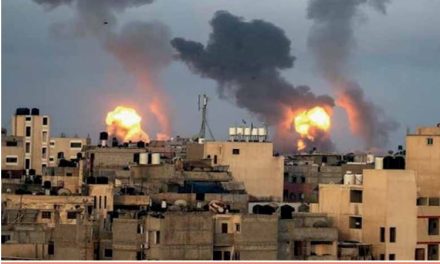
Meanwhile, the death toll in Gaza has climbed to catastrophic levels. According to the Gaza Health Ministry, between October 7, 2023, and mid-July 2025, at least 58,500 Palestinians have been killed and over 139,000 injured. These figures include many children, women, the elderly — civilians who bore the least blame and the greatest cost.
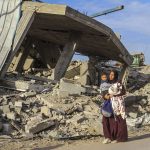
In a particularly deadly period, between March and July 2025, over 7,000 were killed and more than 25,000 injured in renewed hostilities. Access to food, clean water, medical supplies, and safe shelters has deteriorated severely. Many hospitals run without enough staff or medicine. Famine looms. Displacement has surged, with millions forced from their homes into ever more crowded and unsafe zones.
These are not abstract statistics. They are mothers waiting at border crossings for medical supplies, children unable to attend school, families buried under rubble, living with fear and hunger.
The Hope in Recognition
What do these recognitions by France, Canada, the UK, Belgium, Portugal, and Australia bring to Palestinians? First, symbolic power. Diplomatic recognition bolsters legitimacy in international law, and strengthens calls for enforceable accountability mechanisms. It pressures Israeli authorities and the international community to shift from rhetoric to action — not just ceasefire statements, but meaningful resolutions on humanitarian corridors, reconstruction, and protection of civilians.
Secondly, recognition opens diplomatic and legal doors. Palestinian institutions may gain greater access to international bodies — the International Criminal Court (ICC), UN agencies, human rights monitoring — with stronger standing. It may also enable new financial and infrastructural support from countries who, before, feared legal or political backlash.
Thirdly, recognition sends hope — something vital in Gaza. In a place where many have lost homes, loved ones, and dreams, hope matters. It can lift morale, strengthen resistance, and preserve dignity.
Sports, Voices, and Double Standards
Beyond states, individuals and civil society are amplifying the call for accountability. Former French footballer Eric Cantona has spoken out sharply:
“We suspended Russia for invading Ukraine. Yet when allegations of serious crimes against humanity are made in Palestine, there is silence from FIFA and UEFA. Why? FIFA and UEFA must suspend Israel.”
Cantona challenged clubs and players globally to refuse to play against Israeli teams, calling attention to double standards. His outcry taps a swelling frustration: that the same institutions that banned Russia after the Ukraine invasion are still permitting participation of a state accused of comparable civilian suffering.
These demands are not merely symbolic. They force sports bodies, sponsors, and media to examine their own integrity. What does it mean for fairness — and for humanity — if sport continues while bombs fall?
Challenges, Risks, and What Must Follow
Recognition and demands for sporting sanctions create new momentum, but risks abound. Israel and its allies reject many of these recognitions as premature or biased. Some argue that recognition must be paired with steps like demilitarization, democratic reform of Palestinian governance, or verification of human rights independent investigations. Others say sport should not be politicized, citing concerns about collective punishment.
On the ground, Palestinians cannot wait. Hospitals remain overwhelmed; sanctions and border closures limit aid; shelter is destroyed; children face malnutrition. Recognition without delivery of relief risks being just words.
Towards a Convergence of Hope and Action
For Palestinians, the moment is both fragile and powerful. Recognition by states offers official validation of long-claimed rights. Public figures like Cantona offer moral visibility. But Palestinians are starving, wounded, displaced — they need more than international applause.
What must come next: enforceable UN resolutions, credible investigations into war crimes, increased humanitarian access, and protection for civilians. International sports bodies must match their stated principles with action. Recognition should not be the end goal but the beginning of meaningful change.
In a world often indifferent to suffering, the recent recognition of Palestinian statehood and the rising voices against inequality in sport provide a crack of light in Gaza’s dark sky. It is a reflective moment — a moment where diplomacy, sport, and human rights may converge. If the world follows, this may be the turning point Palestinians have long waited for.