














The World Is Watching: Live-Streamed Horror and the Silence on Gaza
Prepared by Abdullah Bamusi Nankumba
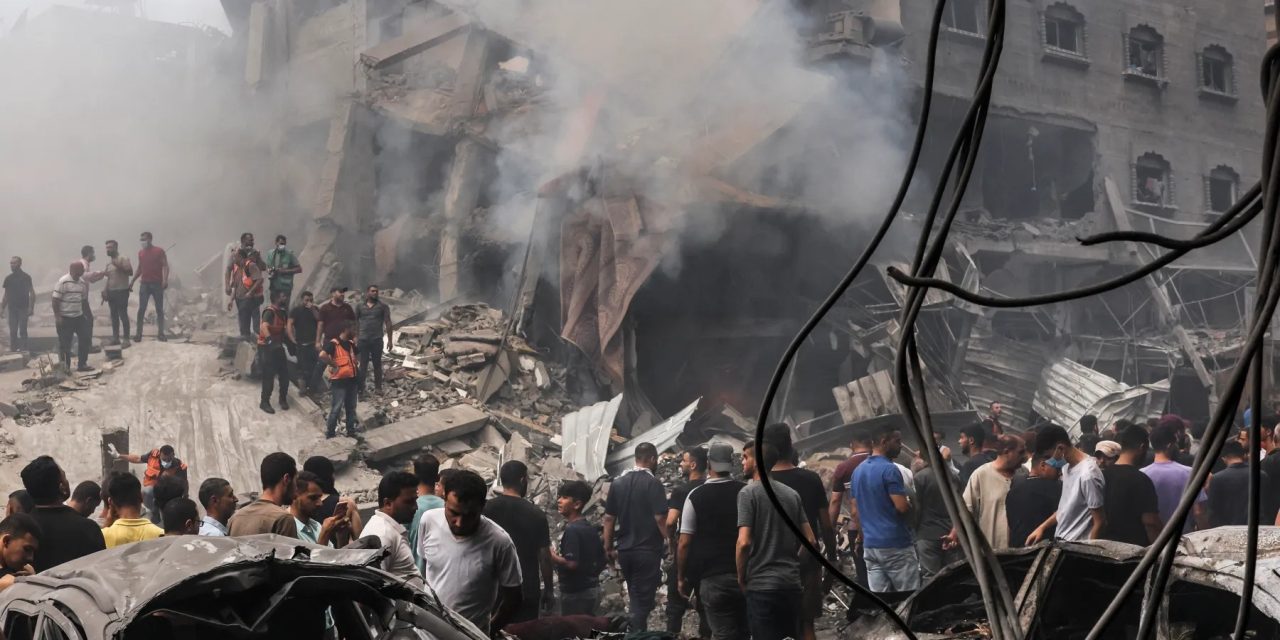
In a grim display of impunity, the Israeli military has turned war into spectacle. Over the past months, harrowing footage has emerged from the besieged Gaza Strip—not from independent media, but from Israeli sources themselves, live-streaming their operations and airstrikes as if part of a grotesque campaign of desensitization. As bombs fall on hospitals, schools, and densely populated neighborhoods, millions across the world are witnessing a massacre in real time.
According to a recent report by Amnesty International, the scale and pattern of destruction in Gaza “amount to war crimes and crimes against humanity.” Civilian infrastructures, including hospitals and UN-run shelters, have been repeatedly targeted. Entire families have been wiped out in their homes. And while these acts are streamed, shared, and replayed on social media platforms, the world—particularly its most powerful states—remains disturbingly passive.
Genocide in Motion
Since October 2023, over 35,000 Palestinians, a majority of them women and children, have been killed in Gaza, with tens of thousands more injured. Entire neighborhoods have been reduced to rubble, forcing over 1.5 million people to flee from north to south, only to be bombed again in so-called “safe zones.” Amnesty’s investigations, corroborated by other human rights organizations like Human Rights Watch and Doctors Without Borders, suggest that Israel’s actions go far beyond self-defense.
“The pattern of attacks shows a chilling disregard for Palestinian lives,” Amnesty states. “This is not collateral damage; it is a deliberate policy of collective punishment.”
International law is unambiguous. The Genocide Convention of 1948 obligates states not only to refrain from committing genocide but to prevent and punish it. Genocide is defined as acts committed with “intent to destroy, in whole or in part, a national, ethnical, racial, or religious group.” The deliberate targeting of civilians, the denial of basic necessities such as food, water, and medical aid, and the use of language by Israeli officials calling for the erasure of Gaza, all form a strong basis for legal scrutiny under this definition.
Silence is Complicity
And yet, the global response has been tepid at best. Western democracies that often position themselves as defenders of human rights have remained largely silent—or worse, complicit. The United States has not only provided weapons and funding to Israel during this campaign but has also vetoed multiple UN Security Council resolutions calling for a ceasefire. The United Kingdom, Germany, and others continue to supply arms and diplomatic cover.
In contrast, countries in the Global South, such as South Africa, Bolivia, and Malaysia, have taken stronger stances, with South Africa even submitting a case to the International Court of Justice (ICJ) accusing Israel of genocide. In its preliminary ruling, the ICJ acknowledged that the evidence provided by South Africa was sufficient to merit further investigation, ordering Israel to take immediate steps to prevent genocidal acts. Still, enforcement mechanisms remain weak in the face of political inertia.
The Weight of Responsibility
The burden now lies on the international community—not just governments, but civil society, human rights institutions, and ordinary people—to act. Silence is no longer neutral. The live-streaming of massacres is a deliberate attempt to normalize violence, to render Palestinian suffering into background noise. It challenges every moral and legal framework that the modern world claims to uphold.
Under international humanitarian law, all states have a responsibility to ensure respect for the Geneva Conventions. This means not only refraining from participating in crimes, but also actively working to stop them. Arms embargoes, diplomatic sanctions, international legal proceedings—these are all tools that have been used before to pressure regimes engaged in war crimes. Why is Gaza an exception?
The answer lies not in legal ambiguity but in political will.
A Growing Global Movement
Despite the paralysis at the level of states, global solidarity for Palestine is growing. Mass protests, student sit-ins, and BDS (Boycott, Divestment, Sanctions) campaigns have intensified in Europe, Africa, Asia, and the Americas. In countries like France and Germany, where pro-Palestinian protests were once banned or suppressed, people are now challenging the status quo at great personal risk. In the U.S., student movements are occupying campuses demanding divestment from Israeli companies and military contractors.
Palestinian women and children have become the haunting faces of this war, not as victims without agency, but as symbols of enduring resistance. Despite unbearable suffering, their voices continue to call out for justice, freedom, and dignity.
Conclusion: No More Excuses
As bombs fall on Rafah and images of dismembered children circulate on screens worldwide, the question is no longer “Do we know?” but “Will we act?”
History is watching. And so is the world.
The live-streamed massacre in Gaza is not just a war crime—it is a test of our collective humanity. Every state, especially those claiming to stand for human rights, must be held accountable for what they choose to ignore. The time for half-measures is over.
Gaza is not a ghost of history—it is the conscience of the present. And the world’s response will define the legacy of this generation.