










The Return And The Reckoning
Inside President Mutharika’s First State of the Nation in a Time of Economic Strain
By Ibrahim Yassin
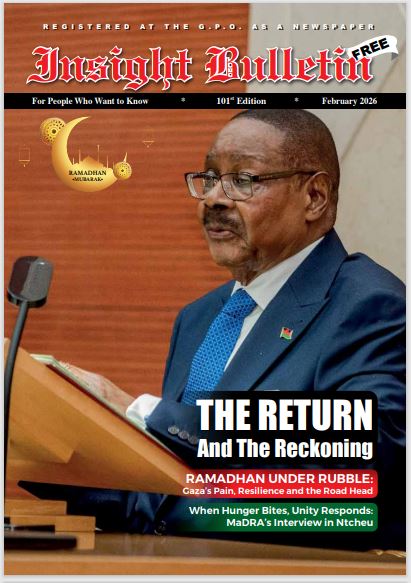
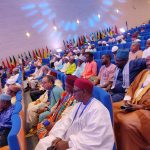
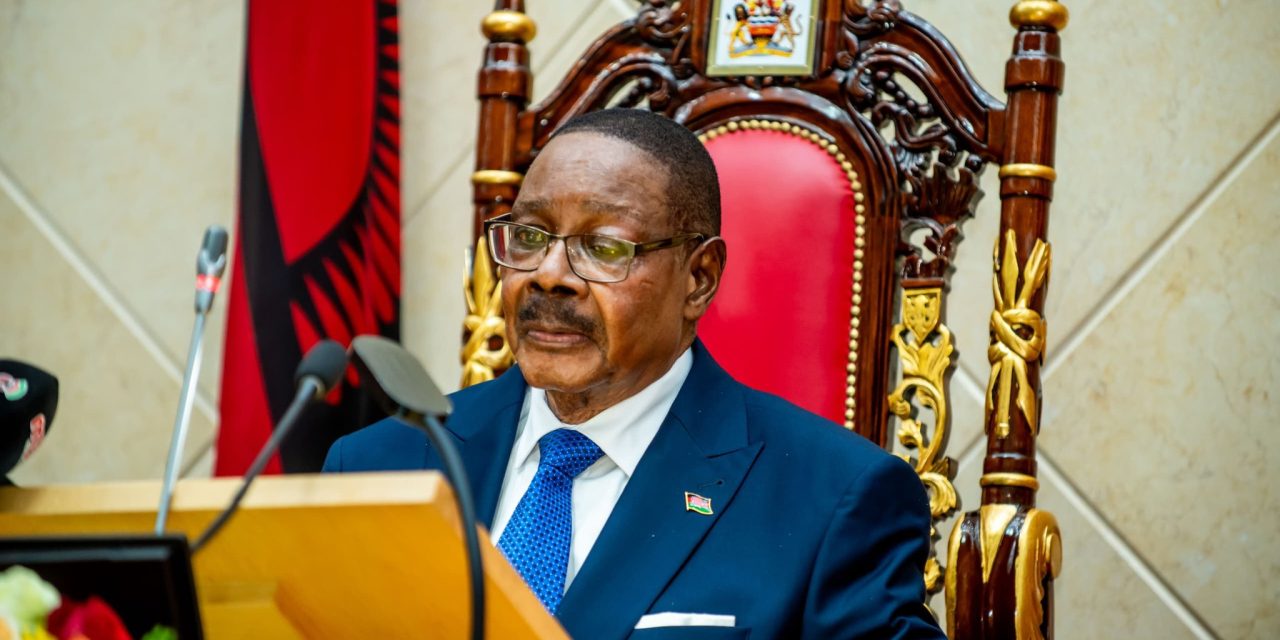
When Arthur Peter Mutharika rose to deliver his 2026/2027 State of the Nation Address, Parliament was attentive but unsentimental. Beyond the chamber, Malawians were contending with rising commodity prices, persistent fuel queues, foreign exchange shortages, and inflation nearing 30 percent. The economic strain was tangible.
Framed under the theme “The Path to Economic Recovery: Delivering a People-Centered Development,” the address was concise and restrained. There was little rhetorical flourish. Instead, the President positioned his administration as a corrective force stepping into what he described as a “man-made crisis.”
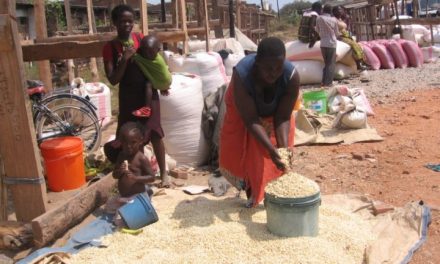
He outlined the inheritance: inflation at 28.7 percent, economic growth at 2.7 percent, depleted reserves, drug shortages, and fuel scarcity. These were not abstract indicators but lived realities affecting traders, civil servants, and farmers alike.
The administration’s early measures have been defensive: stabilizing maize supply, securing fuel imports, auditing payroll systems, freezing questionable contracts, and tightening public expenditure. The tone conveyed urgency rather than celebration.
One of the most debated commitments — raising the Constituency Development Fund to MK5 billion per constituency — was reaffirmed. Oversight reforms and a digital monitoring dashboard were promised. If fully implemented, the policy could significantly reshape local development financing. Its long-term fiscal sustainability, however, remains a critical question.
Austerity featured prominently. Fuel entitlements have been reduced, travel restricted, diplomatic passports recalled, and ghost workers removed from the payroll. These moves, though administratively technical, signal an attempt to project discipline and restore public confidence in state management.
The rollout of free secondary education in public day schools has brought more than 1,800 students back to class. Yet the exclusion of boarding institutions underscores constrained fiscal space. Recovery, the address implied, is incremental.
Opposition voices were swift to respond. Leader of the Opposition and senior MCP figure Simplex Chithyola Banda argued that the address did not present the full economic picture, contending that structural challenges remain deeper than portrayed. He questioned whether current interventions are sufficient to reverse entrenched inflationary pressures and foreign exchange shortages.
Similarly, UDF president Atupele Muluzi maintained that while administrative tightening is welcome, the speech fell short of offering transformative solutions for ordinary Malawians facing escalating living costs. He cautioned that stabilization without broad-based growth would provide limited relief at household level.
These responses underscore the political tension surrounding the recovery narrative. Four months into office, perception is still fluid. The President closed with a firm declaration that there will be no sacred cows in the fight against corruption — a pledge that will ultimately be measured not by rhetoric, but by enforcement.
A State of the Nation Address is not a verdict; it is a statement of direction. Inflation forecasts will be tested. CDF expansion will demand rigorous oversight. Donor confidence will hinge on sustained fiscal discipline.
What may endure from this SONA is a tonal recalibration: less spectacle, more administrative accounting. Whether that posture translates into measurable economic relief will determine if this moment marks genuine recalibration or simply another chapter in Malawi’s cyclical governance narrative.