















Trump’s 20-Point Plan: Can the Ceasefire in Gaza Be Trusted?
Prepared by Abdullah Bamusi Nankumba
After nearly a year of relentless bloodshed, former U.S. President Donald Trump has unveiled a “20-point plan” that has led to what many are calling a fragile ceasefire between Israel and Hamas. The deal — brokered with quiet diplomacy involving Qatar, Egypt, and the United States — marks the most significant pause since Israel began its latest offensive on Gaza. But beneath the headlines of peace lies a deeper question: Can this ceasefire be trusted?
The Road to Doha
According to reports from Al Jazeera, the plan was finalized after weeks of high-stakes negotiations in Doha, where Qatari mediators worked around the clock to bridge a gaping divide between Israeli and Hamas representatives. Egypt’s intelligence chief, Abbas Kamel, also played a crucial behind-the-scenes role, shuttling messages between Cairo, Tel Aviv, and Doha.
Trump’s envoys reportedly presented a framework aimed at halting the violence, releasing hostages, and allowing humanitarian aid into Gaza. Yet insiders suggest the talks were far from smooth. Hamas sought an immediate end to Israel’s blockade and the full withdrawal of its forces, while Israel demanded guarantees of security and the disarmament of resistance factions.
Despite these sticking points, the ceasefire was announced after 72 hours of marathon talks. A senior Egyptian official told Al Jazeera that the agreement was “the most realistic step toward stability in years,” though he warned it “hangs by a thread.”
What the 20-Point Plan Entails
Trump’s proposal outlines 20 interconnected steps toward a “comprehensive peace.” It includes a temporary cessation of hostilities, the establishment of safe humanitarian corridors, and a mechanism for prisoner exchanges. It also proposes an international reconstruction fund — heavily financed by Gulf states — to rebuild Gaza’s shattered infrastructure.
Perhaps most controversially, the plan calls for the deployment of international peace monitors, possibly under the United Nations or Arab League supervision. While this point was hailed by some as a safeguard, others see it as an intrusion that could cement Israel’s control under the guise of security oversight.
Al Jazeera analysts note that while the document offers a structure for calm, it stops short of addressing the root cause — Israel’s occupation and the Palestinian struggle for statehood. “Without justice and sovereignty,” one commentator argued, “peace will remain an illusion dressed in diplomacy.”
The Politics Behind the Peace
Trump’s reemergence as a Middle East dealmaker has stirred global intrigue. Many see his involvement as politically motivated — a bid to reclaim global relevance ahead of the 2025 U.S. elections. Yet even critics admit that his aggressive negotiation style succeeded where others faltered.
According to sources in Cairo, Trump’s team used economic incentives to push both sides toward compromise. Israel reportedly agreed to ease restrictions on Gaza’s borders in exchange for U.S. support in regional defense projects. Meanwhile, Qatar and Egypt received assurances of expanded trade and security cooperation.
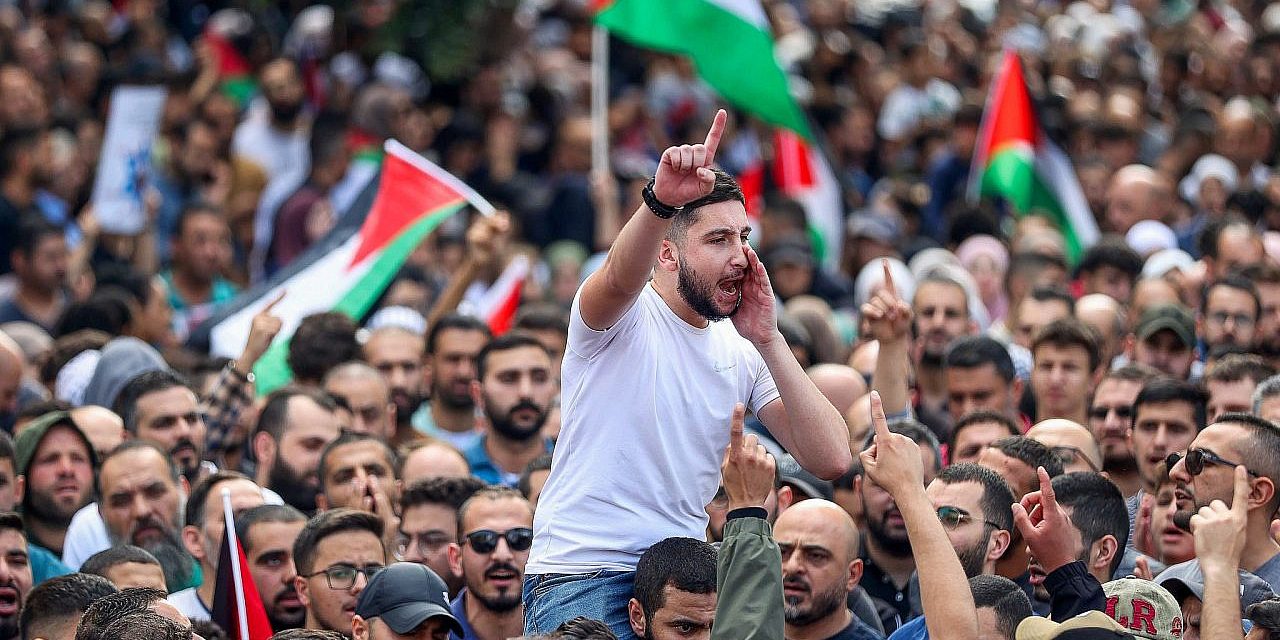
But for Palestinians in Gaza, the ceasefire feels like déjà vu. Al Jazeera’s correspondents on the ground describe scenes of “quiet grief,” as families return to rubble, uncertain whether the bombs will resume. “We’ve seen this movie before,” said one resident in Khan Younis. “They call it peace, but it’s only a pause for Israel to reload.”
The Humanitarian Dimension
The humanitarian toll has been staggering. According to the Palestinian Ministry of Health, more than 40,000 people — mostly women and children — have been killed since the war began. Al Jazeera reports that over 1.8 million Gazans are displaced, surviving on limited aid that trickles through Israeli-controlled crossings.
Under the new plan, aid convoys from Egypt are expected to resume full access through the Rafah crossing, monitored by international observers. Yet relief agencies warn that without lasting political change, the ceasefire will only “slow the bleeding.”
A Fragile Future
While the ceasefire has brought temporary calm, experts warn that neither side has fundamentally altered its position. Hamas insists on Palestinian sovereignty over Gaza, the West Bank, and East Jerusalem — a position Israel rejects.
Qatar’s foreign ministry hailed the deal as a “breakthrough,” but in Gaza and the West Bank, skepticism remains. Palestinian analysts speaking to Al Jazeera described the plan as “a temporary truce without a horizon.” One noted that Israel’s far-right ministers are already opposing key clauses, especially those involving international monitors.
Meanwhile, the United Nations has called for an independent inquiry into alleged war crimes committed by both parties. Israel’s leadership, however, has dismissed the probe as “politically biased,” while Hamas insists on international accountability for what it calls “genocide.”
Can It Hold?
The 20-point plan may represent a turning point — or merely another chapter in a long history of failed truces. Its success depends on implementation, trust, and political will, all of which remain in short supply.
“Every ceasefire looks good on paper,” one Qatari diplomat told Al Jazeera. “But unless Israel ends the occupation and Palestinians achieve justice, peace will always be temporary.”
As the world watches Gaza breathe in the first moments of quiet, the echoes of past betrayals linger. For now, guns are silent, but the wounds — physical, political, and emotional — remain open.
Whether Trump’s plan marks a genuine path to peace or a carefully staged illusion will be revealed not by signatures on a document, but by what unfolds in the days to come.
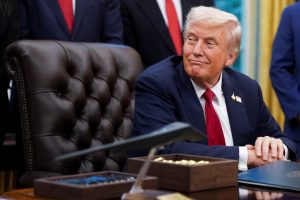
U.S. President Donald Trump sits the Oval Office to sign an executive order on AI and pediatric cancer research, at the White House, Washington, D.C., U.S., September 30, 2025. REUTERS/Nathan Howard