















Starvation After The Rain of Bombs: Gaza’s Descent Into Hunger And Despair
Prepared by Abdullah Bamusi Nankumba
A NATION STARVING IN SILENCE
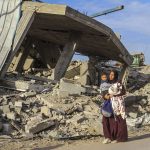
Gaza’s skyline is now jagged with ruins, the air thick with dust from months of bombardment. The bombing raids may have paused in some areas, but what remains is devastation — and hunger. Hospitals lie in ruin, schools have crumbled, water and power systems have been shattered. Amid the wreckage, another killer moves quietly but relentlessly: starvation.
Food is almost absent. Aid convoys — once the fragile thread keeping over two million people alive — arrive in such small numbers that they vanish into the vast need before the trucks even stop. Families have replaced the word “meals” with a new vocabulary: one piece of bread split between five, a handful of lentils, or nothing at all.
HUNGER: THE STEADY PULSE OF DEATH
Doctors in the few remaining hospitals say the famine cases now arriving are unlike anything they have seen before. Bodies come in with skin clinging to bone. Many are so malnourished their bodies have begun to consume muscle for energy.
Among the victims was eleven-month-old Zeinab Abu Halib. Images of her fragile, ribbed body emerged from Nasser Hospital shortly before she died — a haunting symbol of a crisis claiming hundreds of lives, including dozens of children who never reached school age.
FROM RAIN OF FIRE TO EMPTY PLATES
This famine did not happen by chance. It followed the destruction of Gaza’s survival infrastructure. Water treatment plants were destroyed early in the campaign, forcing families to drink unsafe water. Power stations were obliterated, plunging entire cities into darkness and shutting down hospital equipment. Schools became rubble or overcrowded shelters where disease spread quickly.
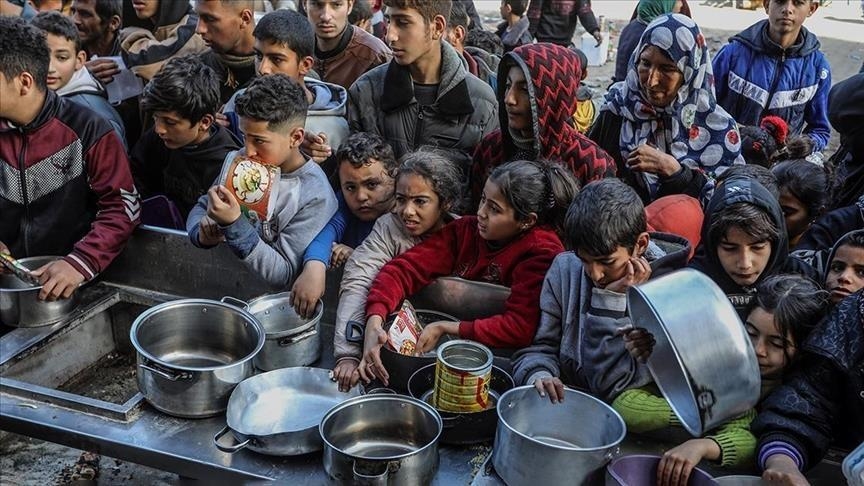
Without electricity, bakeries could not run ovens. Without fuel, trucks carrying food could not move. Even when aid entered, it was delayed for days at checkpoints. By the time it reached distribution points, the quantities were so small they sparked chaos. Witnesses report people collapsing in aid lines — some dying before they reached the front.
A FIGHT FOR LIFE, NOT FOOD
The chaos was captured by Al Jazeera’s Ibrahim al-Khalili, who described a food distribution site in Gaza City as “less about food and more about human survival.” Among the crowd was 34-year-old Mustafa Tanani:
“We come from far away and end up with nothing. I saw a man fall in front of me today. We tried to lift him, but he was gone. Hunger took him.”
Nearby, mothers clutched children too weak to stand. Some fainted from heat and exhaustion. In those moments, survival was measured in minutes — who would make it to the truck, who would not.
INSIDE THE HOSPITALS OF HUNGER
At al-Shifa Hospital, the corridors are lined with malnutrition cases. In the pediatric ward, Maria, just 10 months old, lies motionless in her mother’s arms, her tiny arm scarcely thicker than a thumb. “She is always lethargic,” her mother says. “You do not find her responsive.”
Dr. Nour Sharaf says even medical staff are starving:
“We work without food for days. Some mothers faint while breastfeeding because they have not eaten in days.”
Children, he warns, are dying at home before they can be brought in for treatment.
LIFE IN THE SHADOWS OF A SIEGE
In Khan Younis, families burn scrap wood to cook what little they find — soot-flavoured lentil water or salvaged pasta shells swept from a shop floor. Parents ration food with impossible choices: which child will eat today, who must wait until tomorrow. One mother admits she boils plain water for hours so her children believe a meal is coming.
At night, Gaza is silent. The blackout has turned the city into a silhouette, broken only by coughing and the shuffling of those searching for water. This is not the quiet of peace, but the exhaustion of bodies that can no longer resist.
THE WORLD WATCHES, GAZA WAITS
Outside Gaza, families watch with grief from afar. In Maryland, USA, Ghada Tafesh lives with the guilt of full cupboards while her relatives survive on aid parcels — if they arrive at all. Inside Gaza, the race against hunger is personal and urgent. Nasma Ayad is trying to evacuate her eight-year-old daughter Jana, who weighs just 11 kg. Jana’s sister has already died of hunger-related illness. “If she stays, she will die too,” Nasma says.
Diplomatic calls for ceasefires echo in press rooms, but inside Gaza the clock ticks in another language — the hours a body can last without food. Every day, more names are added to the list of those who starved to death. They die quietly, in corners of hospitals, in the shadows of their homes.
The war’s bombs destroyed Gaza’s skyline. Hunger is now erasing its people. In that silence between airstrikes, the question remains: will the world act before Gaza disappears into the dark, leaving only photographs of those who could not be saved?